Quantifying the rise and fall of research fields

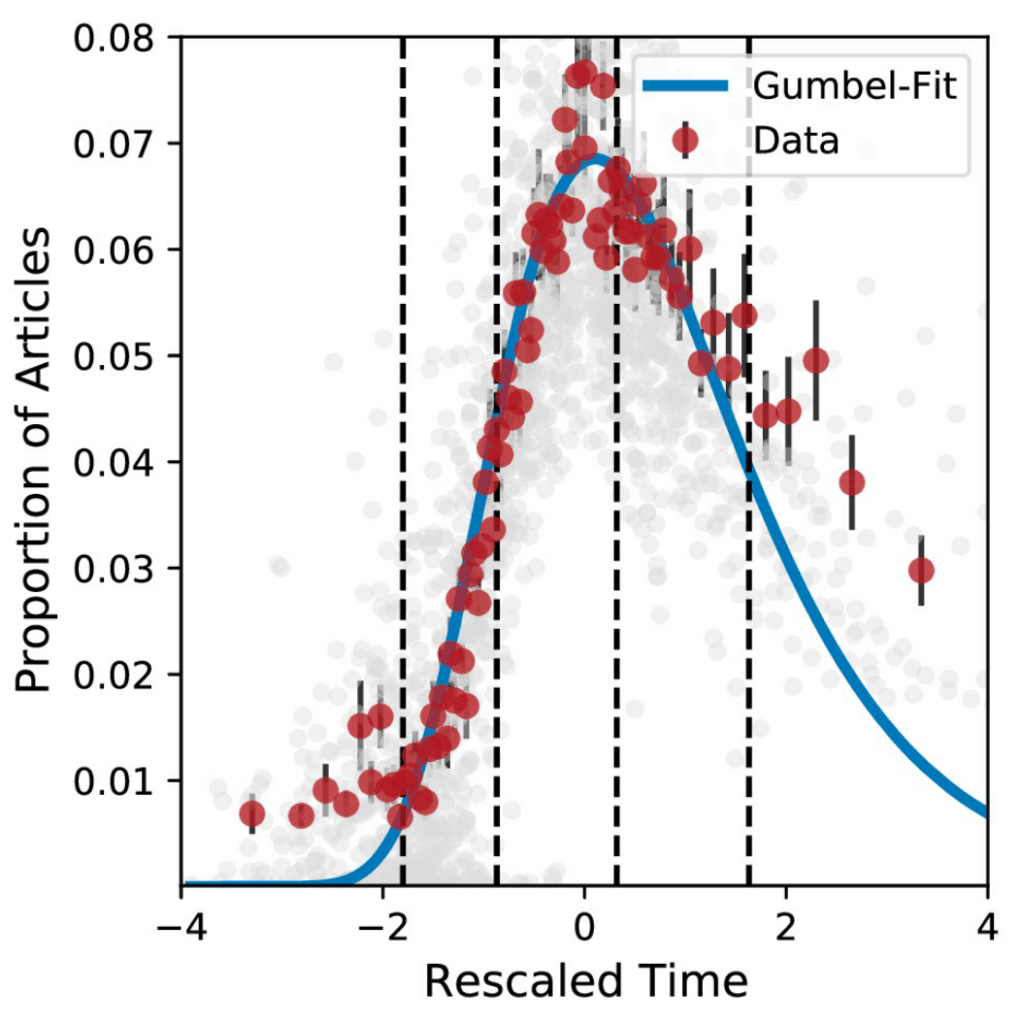
In this paper published in PLoS ONE, we leverage field tags metadata from the open access arXiv repository (1.5M articles) to reconstruct the evolution of 175 research fields from Physics, Maths, CS. We show that the observed rise and fall behaviour of fields is well described by a 2-parameters right-tailed Gumbel distribution, allowing us to rescale fields on a universal time scale and compare them on the same terms. Using delineations from the innovation literature, we then distinguish standard evolutionary stages of creation, adoption, peak, early and late decay, and we quantify characteristics of authors and articles at each stage. We find that early stages are characterised by small interdisciplinary teams of early career researchers publishing disruptive work, while late phases exhibit the role of specialised, large teams building on the previous works in the field.

Continue reading
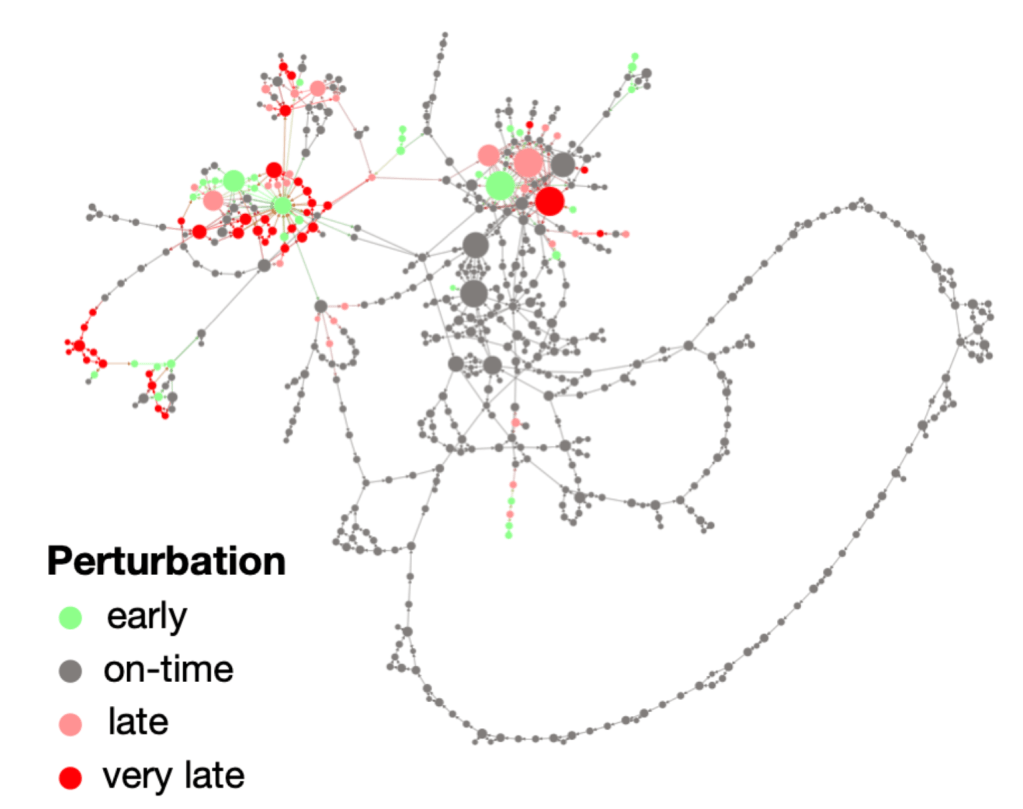
Exploring Knowledge: Research Trajectories in Science

How do scientists explore the vast and ever-growing landscape of knowledge? Can we measure how new ideas emerge and spread?

In this talk, I presented our ongoing research on quantifying the exploration of the knowledge space, combining methods from network science, spatial mobility, and learning theory. Drawing on a unique dataset of 1.5 million open-access preprints from arXiv across Physics, Computer Science, Biology, and more, we traced the “research trajectories” of scientists as they navigate, explore, and exploit ideas over time.

Our findings reveal patterns in how researchers move through the knowledge space—sometimes as explorers, venturing into new territories, and sometimes as exploiters, deepening existing fields. This ecological perspective on knowledge foraging offers fresh insights into the evolution of science and innovation, with potential applications for research policy and collective learning.

đź“„ You can read the related article.

A “Collaborative sonar” to reconstruct team networks

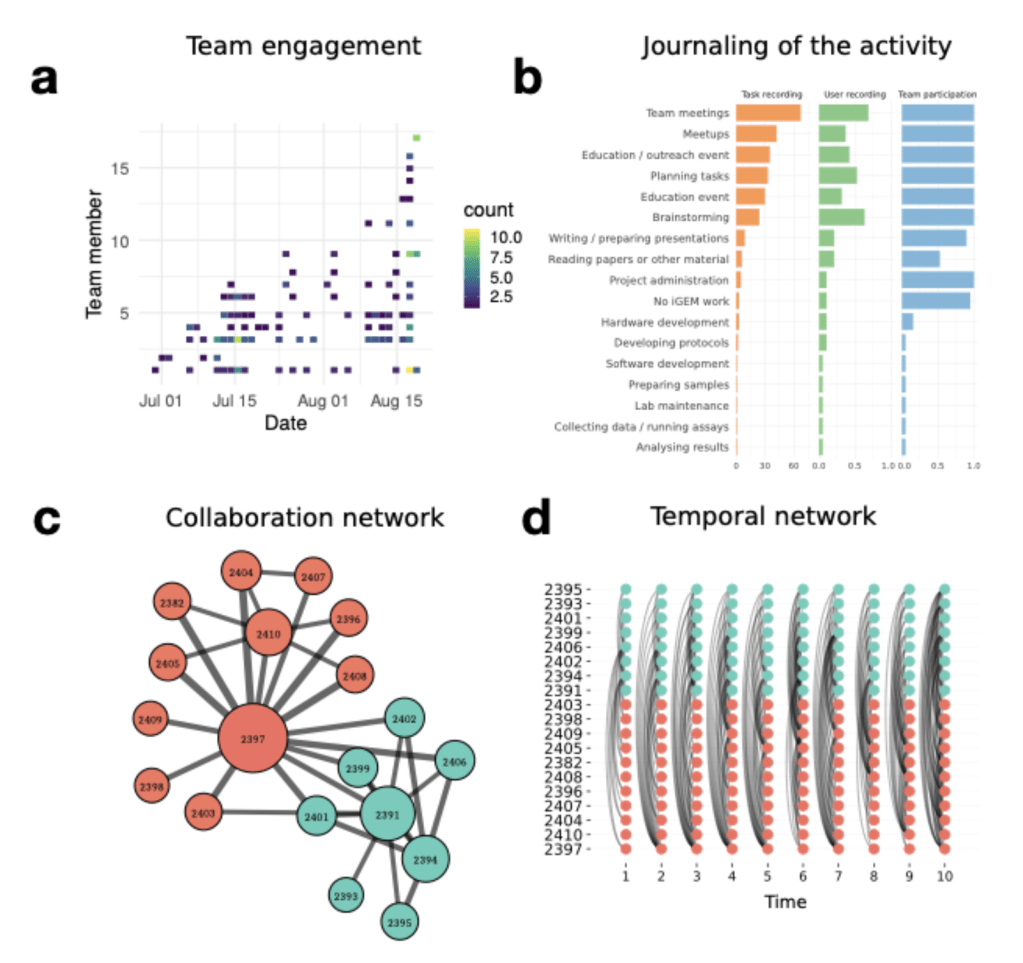
In this new article presented at the ACM Conference on Pervasive and Ubiquitous Computing, we introduce the CoSo app (Collaborative Sonar) for large-scale collection of collaboration data within team ecosystems. The acquisition of passive social data through digital traces can be limited and often needs to be supplemented by qualitative approaches such as surveys or self-reported data. However, collecting relational surveys at scale poses challenges both in terms of human deployment and technical issues, as it involves probing the interactions relevant to an individual (for example, their team members). To address this need, we developed the CoSo (Collaborative Sonar) platform.

Continue reading

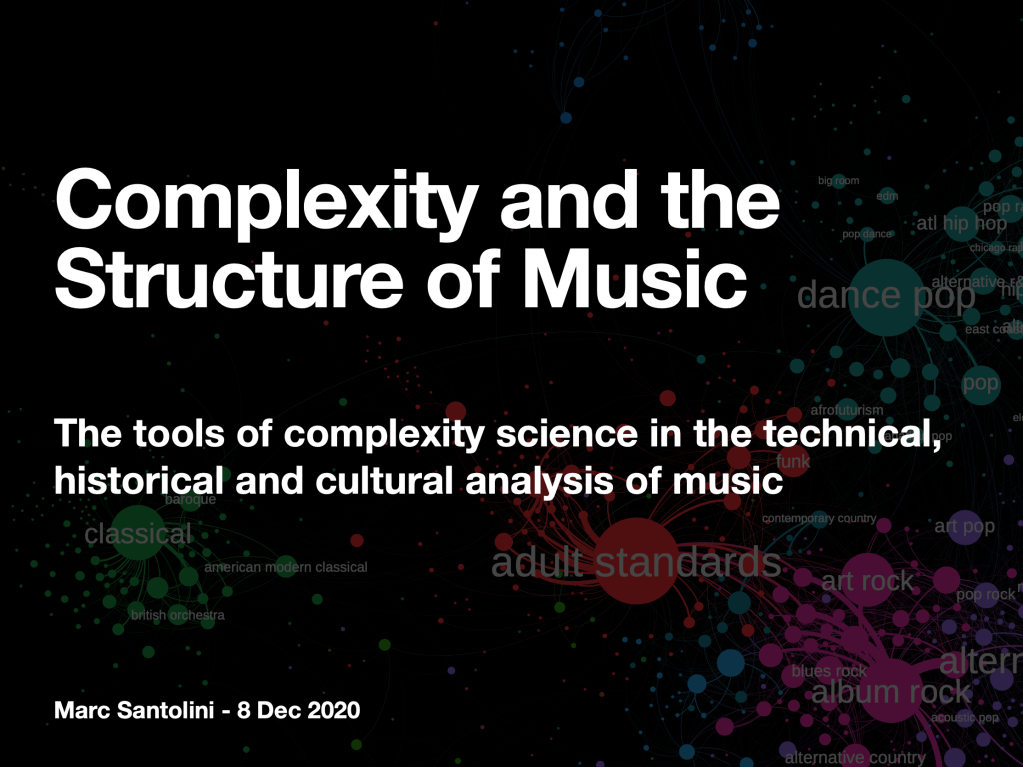
Measuring Music Complexity Across Cultures and Time

What makes music complex? And can we measure that complexity across cultures and time?

I had the pleasure of joining a panel at the Santa Fe Institute’s Complexity and the Structure of Music Working Group, where we explored how tools from complexity science—network theory, statistical mechanics, and cultural analysis—can help us better understand the structure and evolution of music. In my talk, I shared perspectives on how music can be studied as an emergent, self-organizing system, bridging technical patterns with human perception.

You can find the event details here:
🎶 SFI Complexity and the Structure of Music Working Group

You can also watch the full panel here:

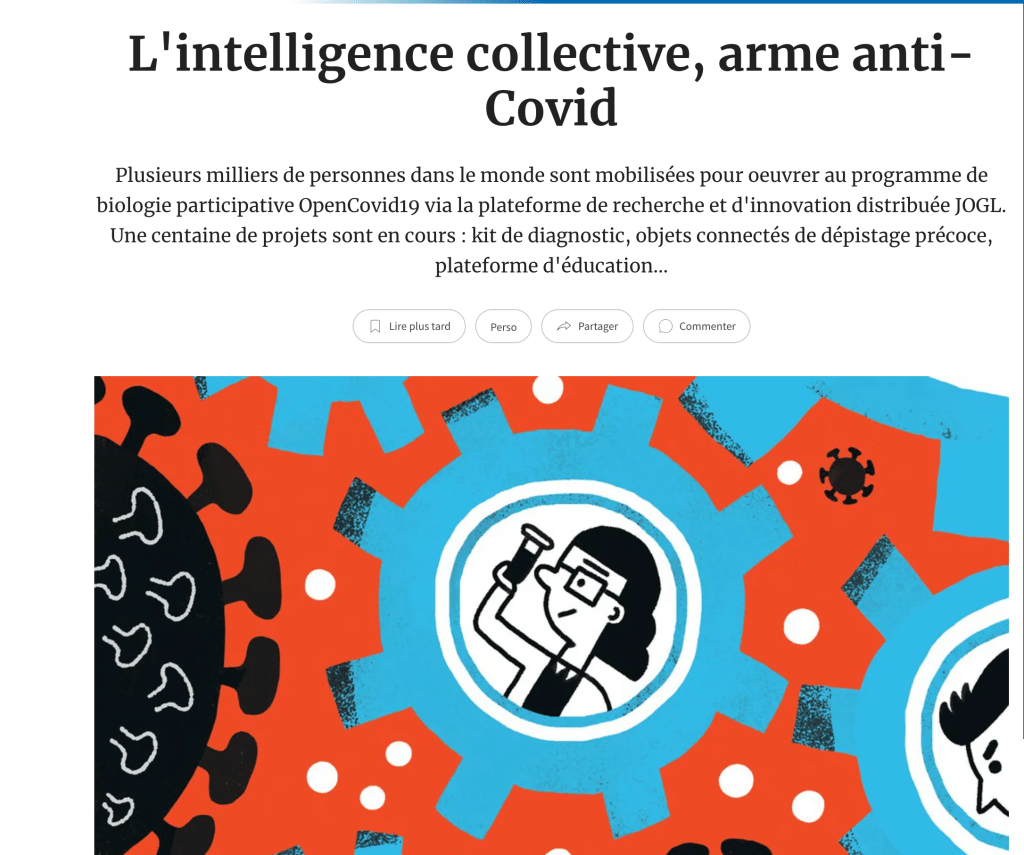
The Architecture of Collective Intelligence: What We Learned from Covid-19

Can a global crisis awaken new forms of collective intelligence?

In the early days of the Covid-19 pandemic, I wrote an article for The Conversation reflecting on the unprecedented surge of collaborative research and open innovation initiatives emerging worldwide. In particular, I shared the experience of building the OpenCovid19 Initiative on the JOGL platform, where thousands of contributors—from data scientists to high school students—came together to co-develop open-source solutions, from diagnostics to ventilator designs.

This piece explores how digital platforms and participatory methodologies can support large-scale, decentralized collaboration—and asks whether this surge of collective intelligence can be sustained beyond the crisis.

You can read the full article here:
đź“° Covid-19: The Rise of a Global Collective Intelligence?

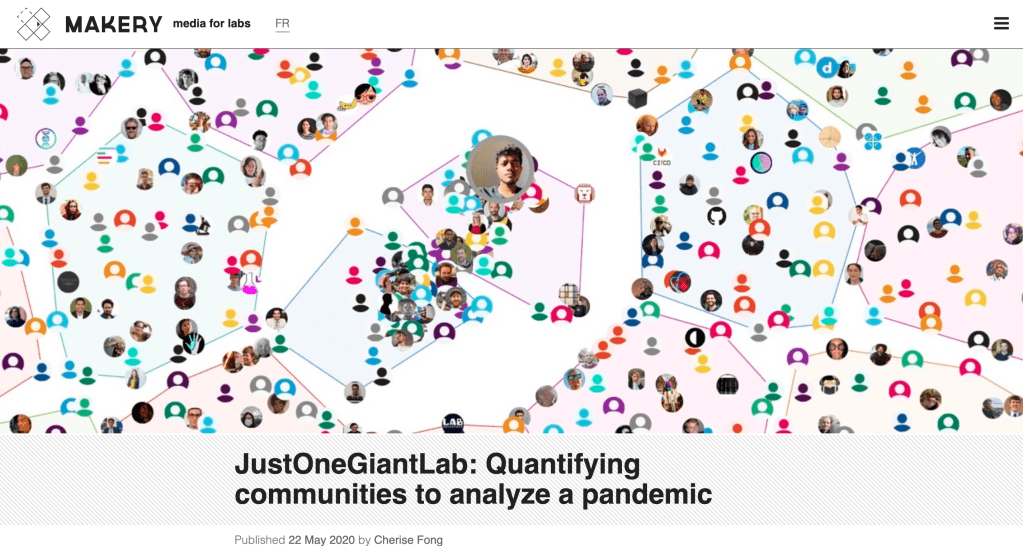
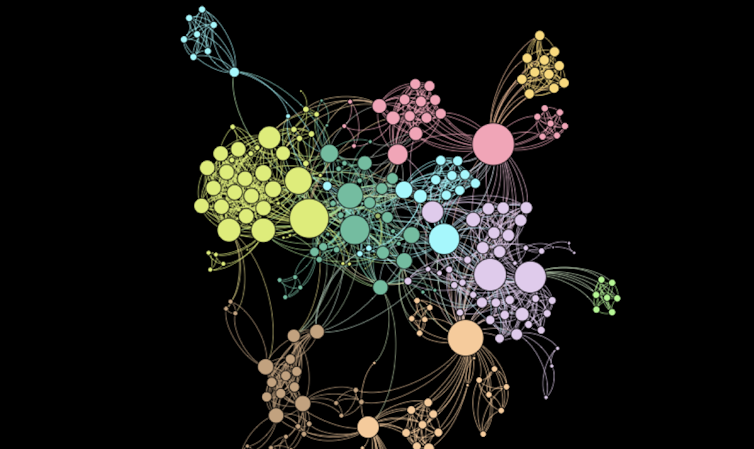
Skill network of Covid-19 projects on the JOGL platform