The Geography of Knowledge: Tracking Researcher Mobility Through Scientific Space

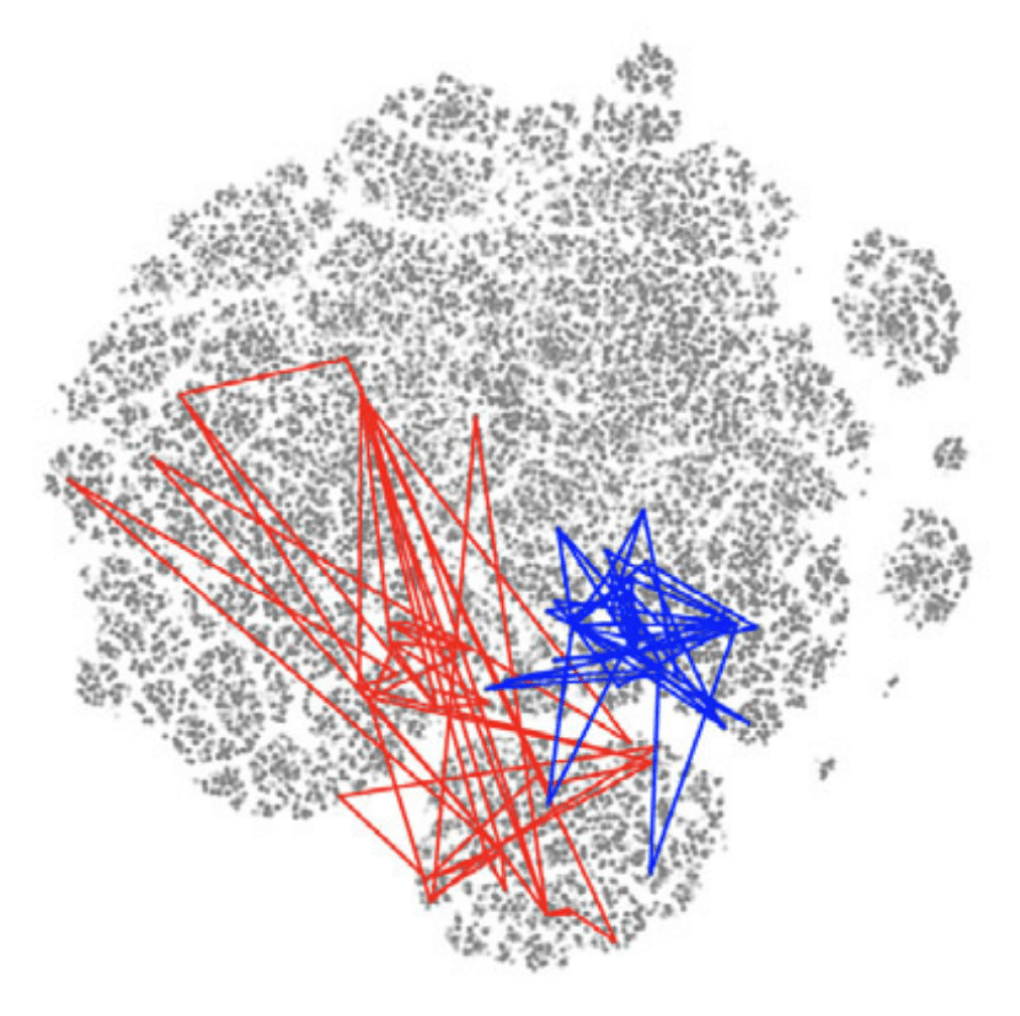
Our paper on the mobility of scientists through the knowledge landscape has been accepted in EPJ Data Science! In this study, we build on our earlier work on the rise and fall of scientific fields in arXiv (see this post), and propose a new lens: what if we studied science like we study human movement?

We constructed a low-dimensional map of scientific knowledge using t-SNE embeddings of 1.5 million arXiv preprints across physics, computer science, and mathematics. This space allows us to track researchers as they “move” through fields via their publications—each trajectory forming a unique scientific path through the landscape.

Continue reading
Rethinking Science from the Ground Up

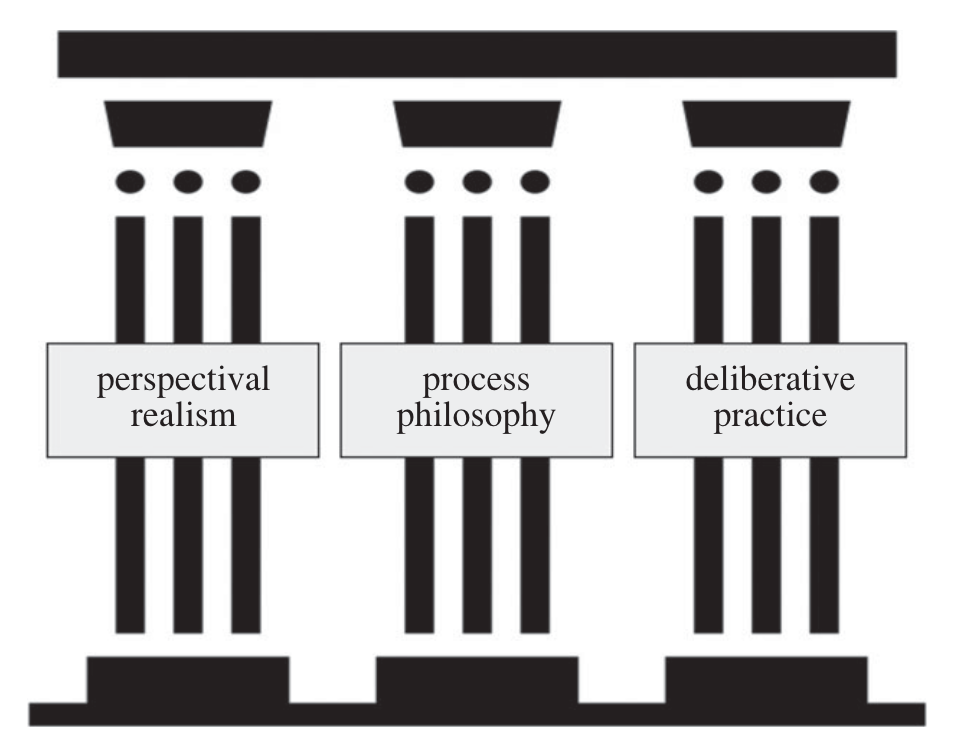
What kind of science do we need to navigate the crises of the 21st century? In our new article published in Royal Society Open Science, we argue that the answer lies in embracing a richer, more situated understanding of knowledge—one that takes seriously the partiality of perspectives and the challenge of integrating diverse, and sometimes incommensurable, ways of seeing the world.

Drawing on epistemology, complexity science, and our experiences in democratic citizen science, we propose a shift from an industrial model of research—focused on outputs, efficiency, and consensus—toward an ecological model of inquiry. This alternative vision emphasizes diversity, deliberation, and long-term robustness. It reframes citizen science not as an auxiliary to academic research, but as a model for a more inclusive and deliberative scientific practice.

Continue reading

A Laboratory Ethnography at Scale: Lessons from 3,000 Synthetic Biology Teams

This new preprint is the result of a collaboration initiated during my postdoctoral stay at the Barabasi lab in Boston, which I continued at the LPI as an affiliated professor. In this project, we introduce the synthetic biology competition iGEM as a model system for the Science of Science and Innovation, enabling large-scale “laboratory ethnography.” We present the collection and analysis of laboratory notebooks data from 3,000 teams, which we deposited on the open archive Zenodo. We highlight the organizational characteristics (intra- and inter-team collaboration networks) of teams related to learning and success in the competition. In particular, we emphasize how teams overcome coordination costs as they grow in size, as well as the crystallization of the inter-team collaboration network over time, limiting access to relational capital for peripheral teams. This work is currently funded by an ANR JCJC grant to collect field data and build network models of collaborations and performance.

Continue reading

What Would a Citizen Science of Wisdom Look Like?

How can contemplatives and scientists come together to co-create knowledge—not just about the world, but about how we live in it?

Last September, I had the privilege of co-organizing and facilitating the first Contemplative Citizen Science Residency at the Life Itself Praxis Hub in Bergerac. Together with Liam Kavanagh and a diverse group of practitioners, researchers, and citizen scientists, we explored how contemplative practice and scientific inquiry can mutually enrich one another.

This unique residency invited participants to imagine what an extreme citizen science of contemplation could look like. We questioned how contemplatives—those deeply trained in attention, compassion, and non-dual inquiry—could meaningfully shape research agendas and methodologies. Through collective practice, discussion, and self-research, we aimed to bridge the gap between subjective experience and scientific rigor.

As Thich Nhat Hanh envisioned, humanity needs a form of spirituality rooted not in dogma, but in evidence and interbeing. This residency was one step toward building that bridge.

If you’re curious to learn more about the motivations and vision behind this initiative, you can watch our introductory conversation and find more information about the program here:
🌐 Residency Details

Participatory Science and the Cultivation of Collective Awareness

What if citizen science could not only help us understand the world—but also ourselves?

Last week, I had the pleasure of giving a talk at Life Itself, where I explored how contemplative practices and participatory science can come together to foster new ways of knowing and collaborating.

In this session, I discussed how the inclusion of contemplative and relational practices in citizen science projects can support impact-driven initiatives and enhance collective well-being. Drawing from my work at the Learning Planet Institute and the Life Itself Praxis Hub, I proposed a vision of contemplative citizen science—an emerging framework where contemplatives and scientists collaborate from the ground up, co-producing knowledge and creating spaces for reflective, embodied, and participatory research.

We examined how relational well-being and perspectival knowing can be integrated into scientific methods through participatory approaches, self-research, and community-based experimentation. Ultimately, I argued for a metamodern epistemology—one that recognizes diverse ways of knowing and invites contemplative inquiry alongside scientific rigor.

If you’re curious about how mindfulness, science, and collective action can converge, you can access the slides here:
👉 Slides

Analyzing Relational Structures in Educational Forums

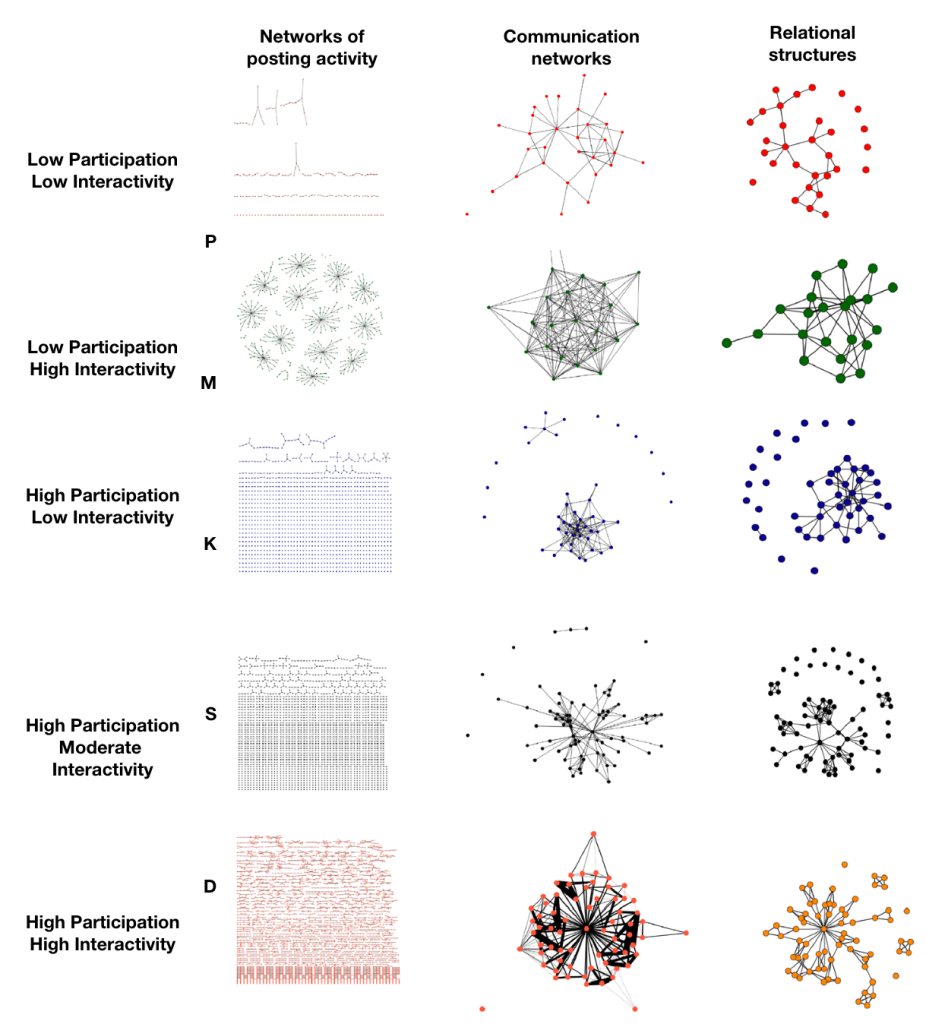
We just published a new article in Educational Technology Research and Development: “Forum posts, communication patterns, and relational structures: A multi-level view of discussions in online courses” . This article relies on the approach we previously published using the formalism of Exponential Random Graph Models (ERGMs) to model the formation of relational networks from data of online forums used in university courses. Utilizing these models in the context of bipartite networks before projecting them into a weighted network allows for the creation of null models that assume different mechanisms of forum use. The statistical comparison of these null model projections with the actual network enabled us to assess the significance of global characteristics such as density, the number of communities, or clustering, as well as filter links to obtain sparse relational structures whose structural properties can be compared and grouped by similarity.

Relational Dynamics and Success in Citizen Science

Our paper on measuring collaborations and performance in citizen science projects is out in Citizen Science, Theory and Practice!

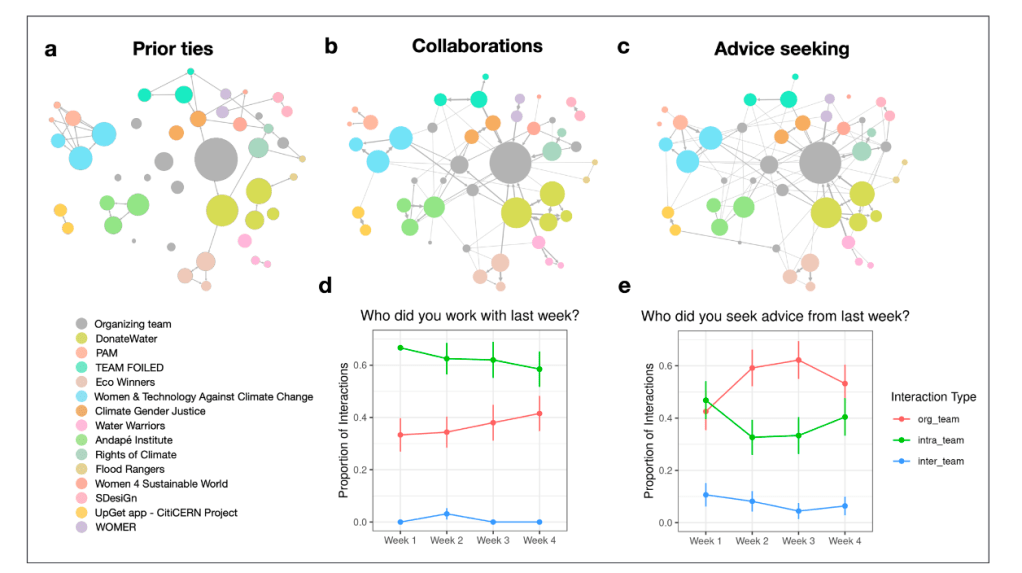
This work is the result of the European project Crowd4SDG, where we directed the part on the quality criteria of citizen science. We implemented the measurement of processual criteria based on a perspectivist and deliberative epistemology of citizen science published in the Royal Society Open Science (see this other post). With the help of the CoSo app (that we presented in this post), we monitored interactions within a collaborative ecosystem of citizen science innovation projects, revealing the relational dynamics and their influence on project performance. Our approach, combining digital analyses and self-reports, allowed us to break down interactions into multi-layer social networks, highlighting the importance of social capital and relationship management for the success of initiatives. We identified links between team structures, their communications, and the quality of their projects, emphasizing the impact of engagement and collaboration on producing relevant and innovative outcomes. This approach enriches the evaluation tools in citizen science and offers concrete ways to improve engagement, inclusion, and diversity in these projects.

Community Review Systems in Science Funding

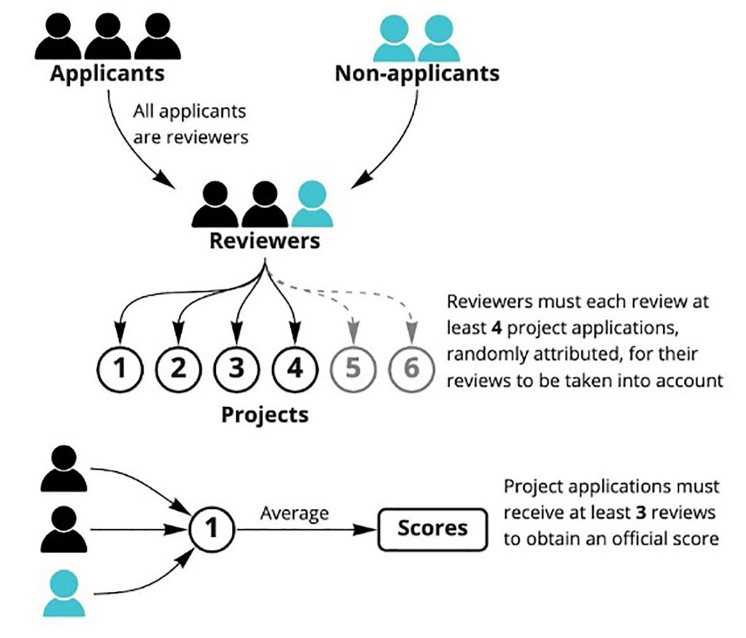
Resource allocation is crucial for the development of innovative projects in science and technology. In response to the urgent COVID-19 pandemic in 2020, we implemented an agile “community review” system with JOGL to quickly allocate micro-grants for the prototyping of innovative solutions. In this paper published in f1000Research we analyzed the results of 7 review cycles. Implemented across 147 projects, this process is characterized by its speed (median duration of 10 days), scalability (4 reviewers per project regardless of the total number of projects), and robustness, measured by the preservation of the projects’ ranking order after the random removal of reviewers. Including applicants in the review process does not introduce significant bias, showing a correlation of r=0.28 between evaluations, similar to that observed for non-applicants and within traditional funding methods. This system allows for agile improvement of proposals, promoting the implementation of successful early prototypes and the constructive revision of initially rejected projects. This work demonstrates the effectiveness of a frugal community review for agile resource allocation in open innovation contexts.

How Networks Shape Learning and Innovation: My Talk at the IRD “ACROSS” Lab in VIetnam

How can we better understand how people learn, collaborate, and innovate together?

In this talk at the ACROSS Lab seminar in Hanoi, I presented how network science approaches can be used to study collaborative learning and problem-solving. Drawing from projects ranging from synthetic biology competitions to citizen science initiatives, I discussed how analyzing interaction patterns and participation dynamics can reveal key factors driving team performance, learning diffusion, and community resilience.

📄 Slides