Open-source communities are often seen as paragons of decentralized collaboration. But even in these systems, invisible hierarchies shape how people contribute, coordinate, and influence. Can we better understand these structures—not just who contributes the most, but how participation patterns emerge, persist, and evolve?
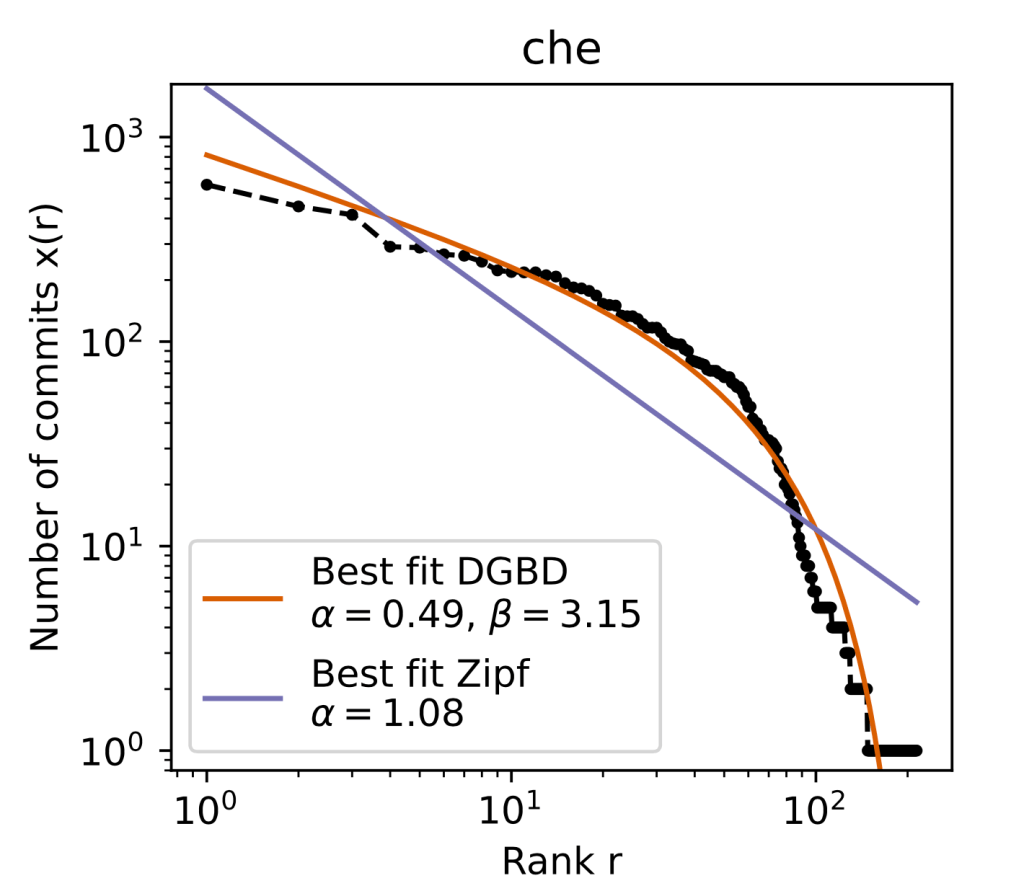
In our recent study published in Physica A, we explore this question using rank-size distributions—mathematical tools that map how activity is distributed across contributors. The most famous of these, Zipf’s Law, has long been used to describe hierarchies in systems as varied as cities, languages, and scientific publishing. It assumes a simple power-law decay: the second most active contributor does half as much as the first, the third one-third, and so on. But while this model is elegant, it’s also limited.
Continue reading

 Marc Santolini