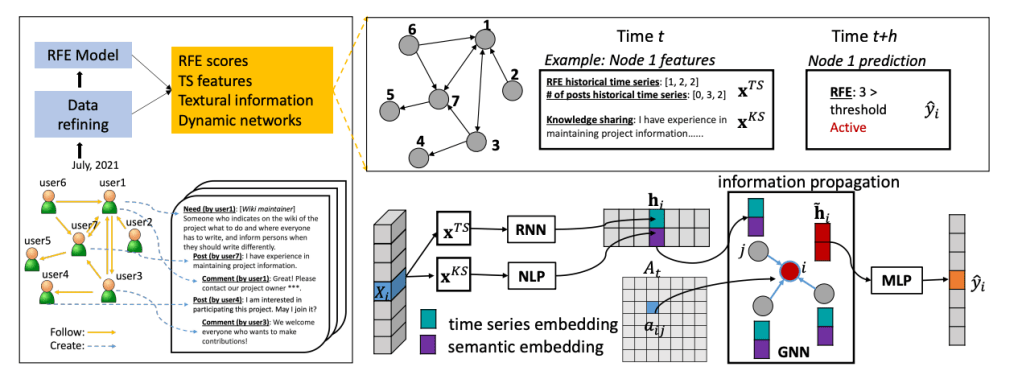
As online platforms increasingly rely on voluntary contributions—from open science to collaborative innovation—the ability to anticipate user engagement becomes both a scientific and practical priority. Yet predicting who will stay active, who will disengage, and why, remains a complex challenge. Our recent paper, KEGNN: Knowledge-Enhanced Graph Neural Networks for User Engagement Prediction (Fan et al., International Conference on Multimedia Retrieval 2025), introduces a novel framework that addresses this gap by integrating behavioral, social, and semantic signals into a unified predictive model.
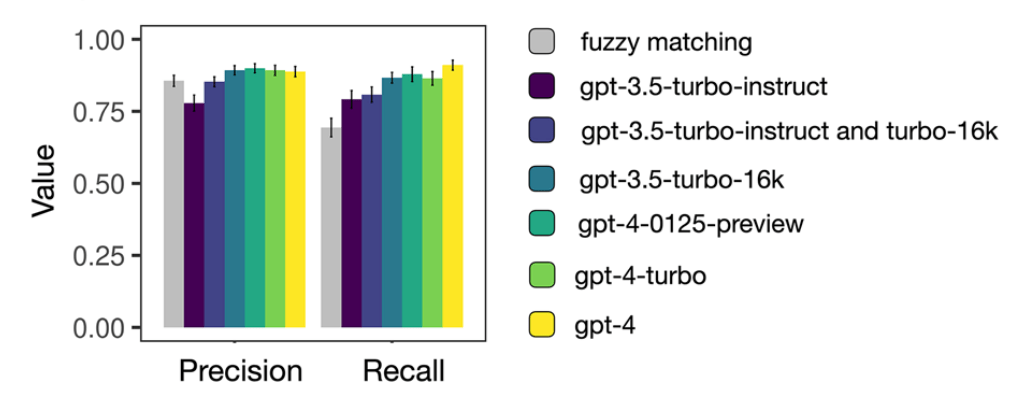
Understanding how scientists collaborate is key to improving research, but much of that collaboration is informal and buried in unstructured text. In our new article published in Applied Network Science, we show how Large Language Models (LLMs) can uncover these hidden networks—retrieving both inter-team collaborations and intra-team task allocations from free-form text with high accuracy.
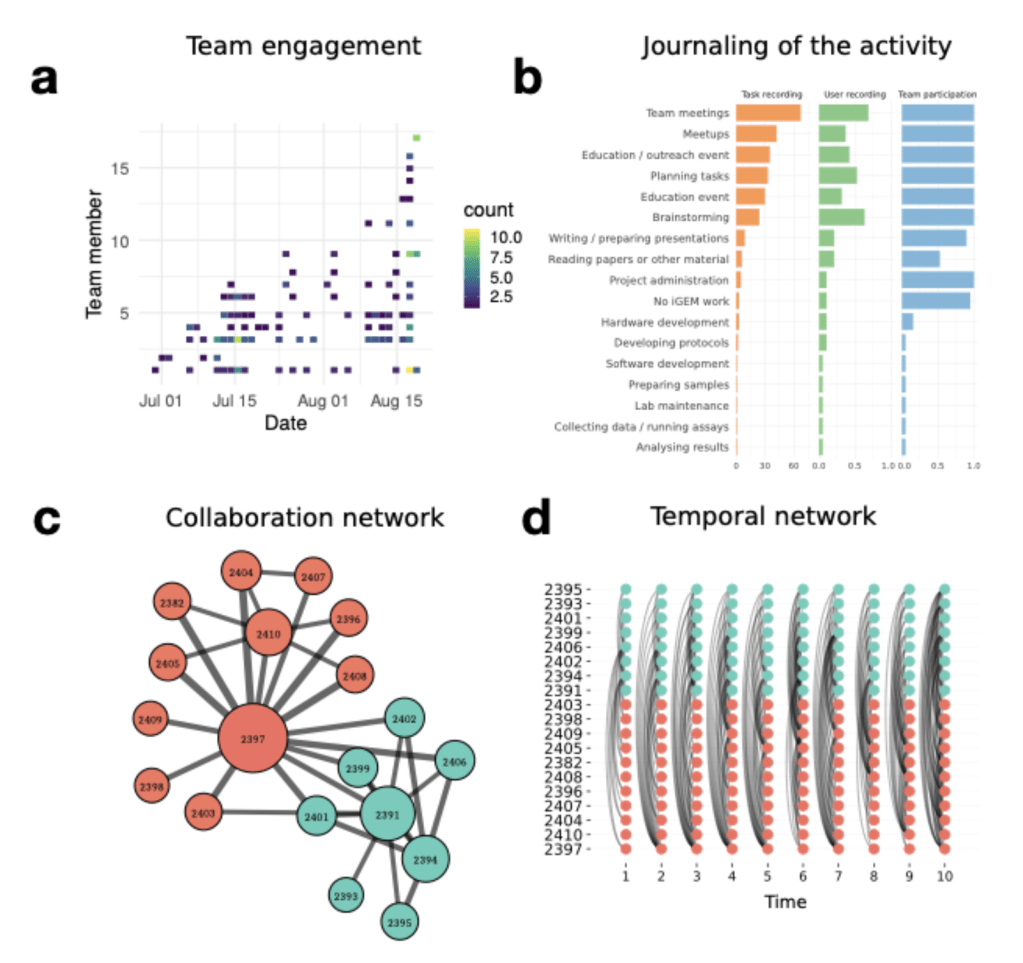
This new preprint is the result of a collaboration initiated during my postdoctoral stay at the Barabasi lab in Boston, which I continued at the LPI as an affiliated professor. In this project, we introduce the synthetic biology competition iGEM as a model system for the Science of Science and Innovation, enabling large-scale “laboratory ethnography.” We present the collection and analysis of laboratory notebooks data from 3,000 teams, which we deposited on the open archive Zenodo. We highlight the organizational characteristics (intra- and inter-team collaboration networks) of teams related to learning and success in the competition. In particular, we emphasize how teams overcome coordination costs as they grow in size, as well as the crystallization of the inter-team collaboration network over time, limiting access to relational capital for peripheral teams. This work is currently funded by an ANR JCJC grant to collect field data and build network models of collaborations and performance.
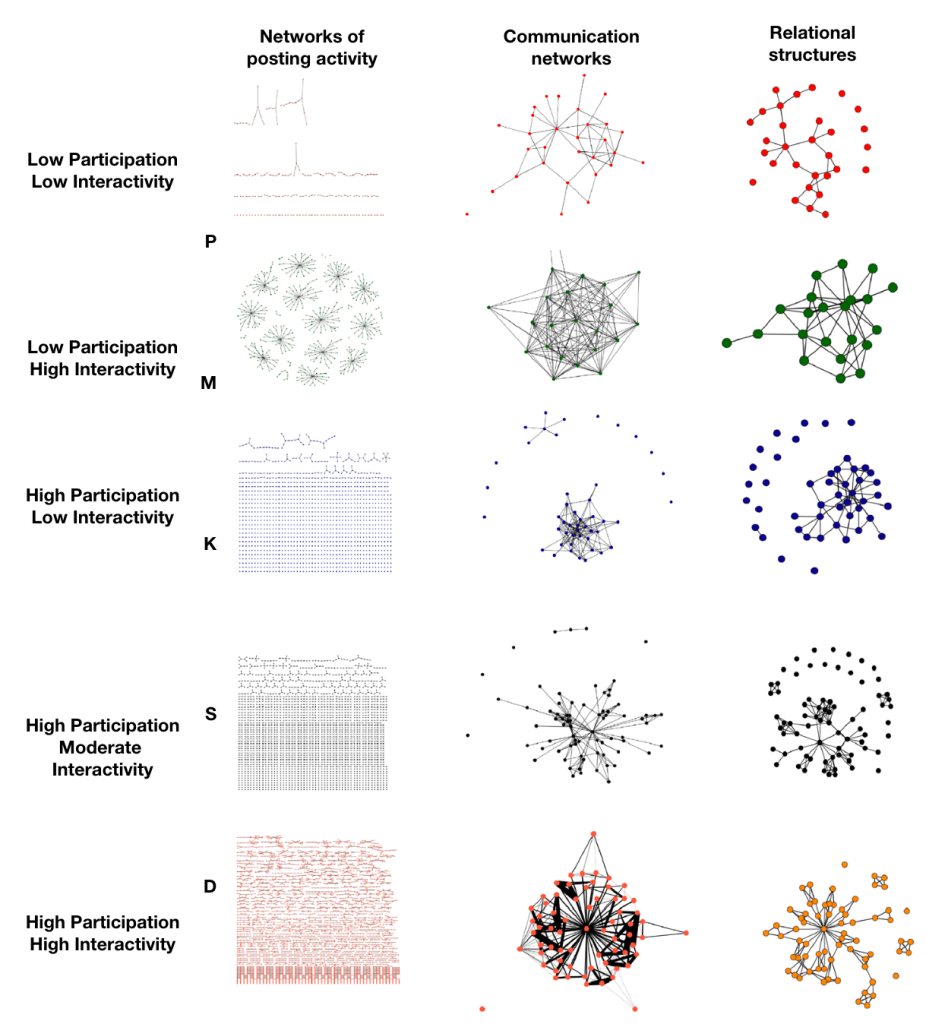
We just published a new article in Educational Technology Research and Development: “Forum posts, communication patterns, and relational structures: A multi-level view of discussions in online courses”. This article relies on the approach we previously published using the formalism of Exponential Random Graph Models (ERGMs) to model the formation of relational networks from data of online forums used in university courses. Utilizing these models in the context of bipartite networks before projecting them into a weighted network allows for the creation of null models that assume different mechanisms of forum use. The statistical comparison of these null model projections with the actual network enabled us to assess the significance of global characteristics such as density, the number of communities, or clustering, as well as filter links to obtain sparse relational structures whose structural properties can be compared and grouped by similarity.
Our paper on measuring collaborations and performance in citizen science projects is out in Citizen Science, Theory and Practice!
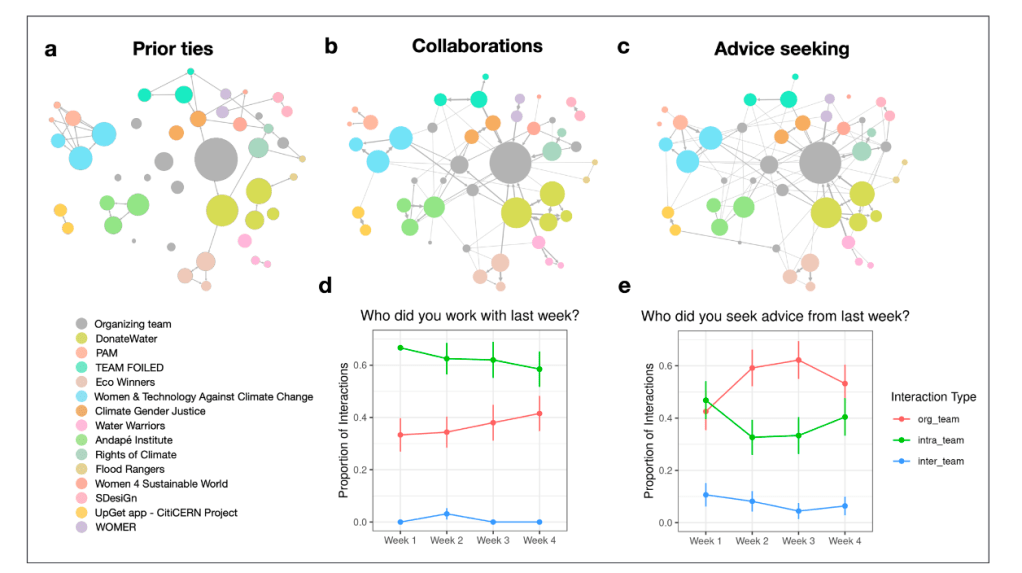
This work is the result of the European project Crowd4SDG, where we directed the part on the quality criteria of citizen science. We implemented the measurement of processual criteria based on a perspectivist and deliberative epistemology of citizen science published in the Royal Society Open Science (see this other post). With the help of the CoSo app (that we presented in this post), we monitored interactions within a collaborative ecosystem of citizen science innovation projects, revealing the relational dynamics and their influence on project performance. Our approach, combining digital analyses and self-reports, allowed us to break down interactions into multi-layer social networks, highlighting the importance of social capital and relationship management for the success of initiatives. We identified links between team structures, their communications, and the quality of their projects, emphasizing the impact of engagement and collaboration on producing relevant and innovative outcomes. This approach enriches the evaluation tools in citizen science and offers concrete ways to improve engagement, inclusion, and diversity in these projects.
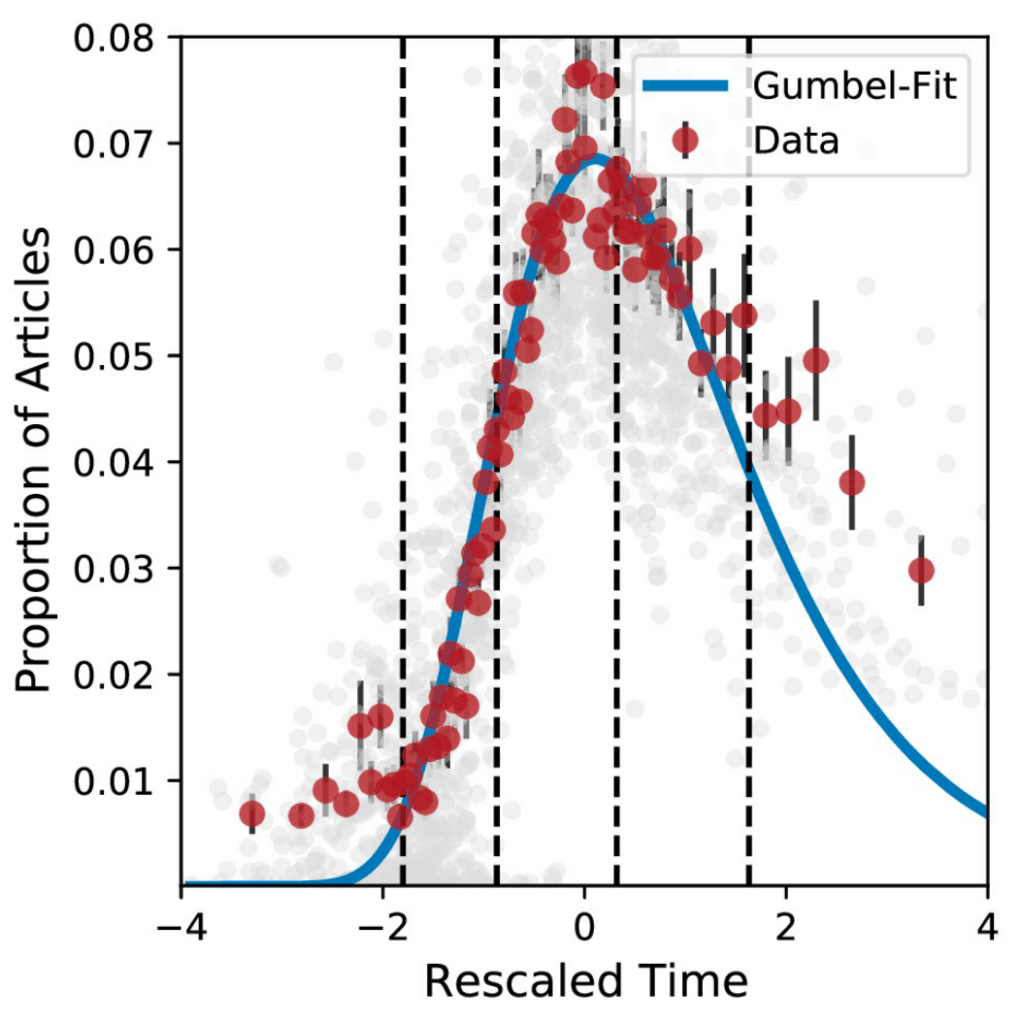
In this paper published in PLoS ONE, we leverage field tags metadata from the open access arXiv repository (1.5M articles) to reconstruct the evolution of 175 research fields from Physics, Maths, CS. We show that the observed rise and fall behaviour of fields is well described by a 2-parameters right-tailed Gumbel distribution, allowing us to rescale fields on a universal time scale and compare them on the same terms. Using delineations from the innovation literature, we then distinguish standard evolutionary stages of creation, adoption, peak, early and late decay, and we quantify characteristics of authors and articles at each stage. We find that early stages are characterised by small interdisciplinary teams of early career researchers publishing disruptive work, while late phases exhibit the role of specialised, large teams building on the previous works in the field.
In this new articlepresented at theACM Conference on Pervasive and Ubiquitous Computing, weintroduce the CoSo app (Collaborative Sonar) for large-scale collection of collaboration data within team ecosystems. The acquisition of passive social data through digital traces can be limited and often needs to be supplemented by qualitative approaches such as surveys or self-reported data. However, collecting relational surveys at scale poses challenges both in terms of human deployment and technical issues, as it involves probing the interactions relevant to an individual (for example, their team members). To address this need, we developed the CoSo (Collaborative Sonar) platform.
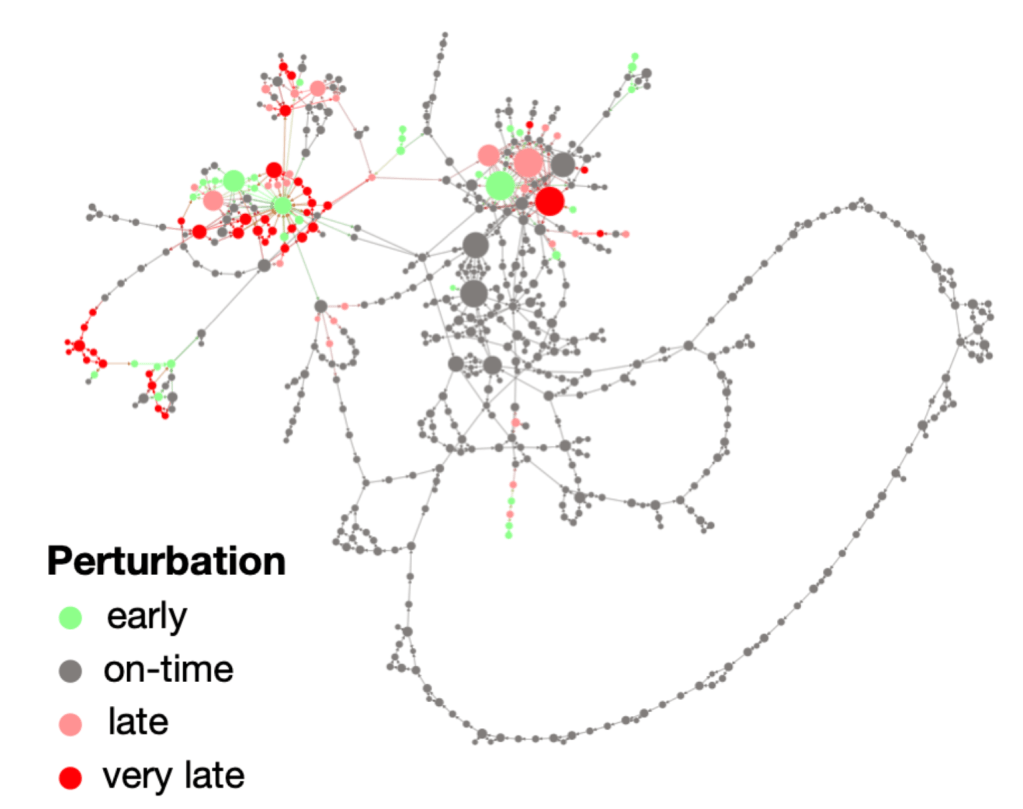
In this new paper in EPJ Data Science, we studied the propagation of delays within activity networks from large construction projects. We show that disrupting nodes with high centrality in terms of perturbation diffusion was associated with the presence of large cascades in the network and a decrease in the overall performance of the projects.
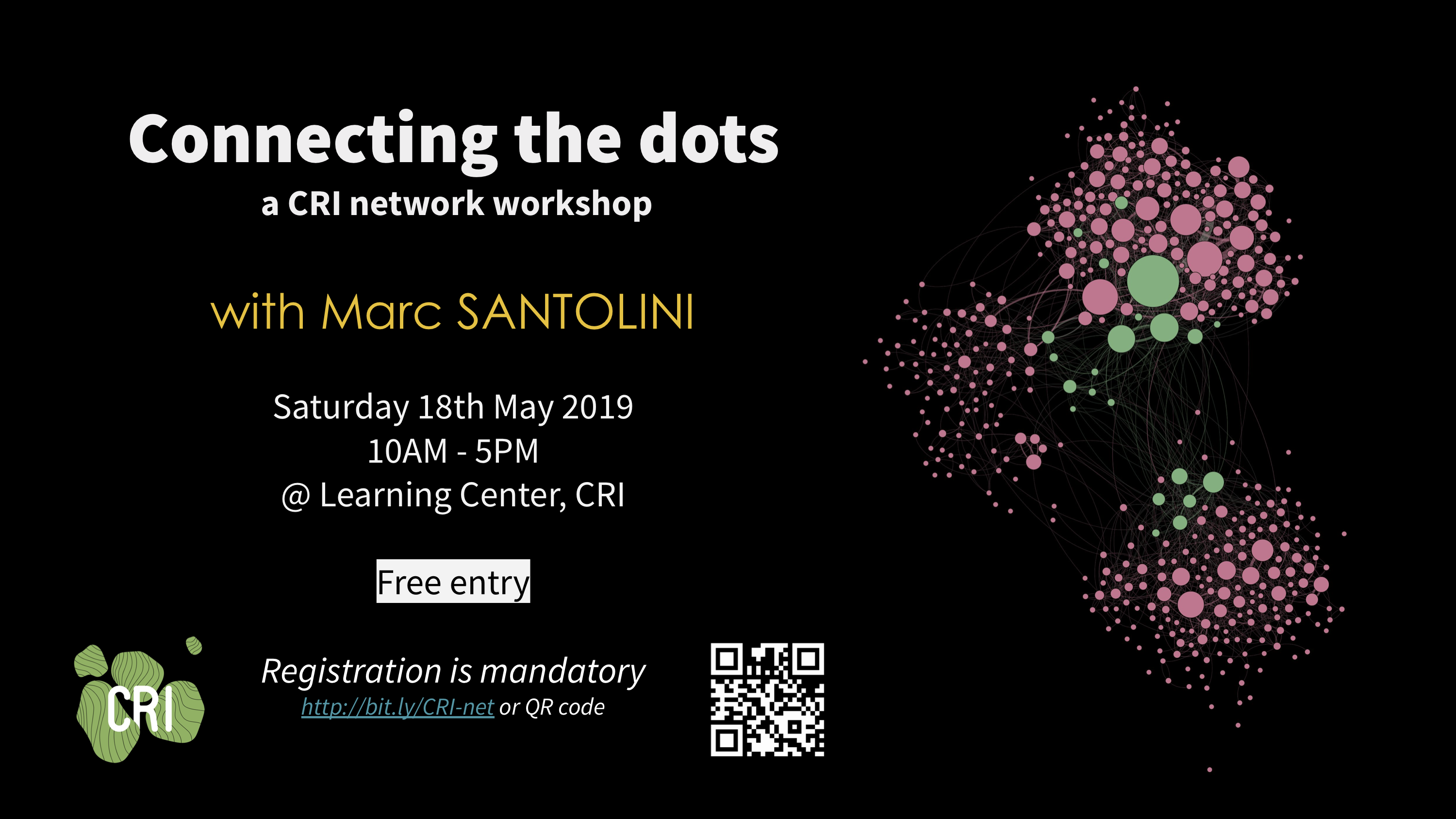
On Saturday 18th May I will organise a network workshop at the CRI! It is intended to be a hands-on experience learning about, mining, manipulating, describing and visualizing networks. It will take place in the learning center of the CRI from 10am to 5pm.
To register to the event, go to the event page! The workshop requires no background or prior experience in Network analysis. Just make sure to bring your MOTIVATION to learn and build your own network! It is intended for learners of all levels (bachelors, masters, PhD). We are open to welcome people outside from CRI as well. Please make sure you have registered for the event. You will be expected to participate actively in the activities of the workshop. Please bring your laptop for the workshop, as you will use them for the hands-on experience. If you do not have a laptop, please inform us so that we can try and find one for you!

 Marc Santolini